
All reputable providers should offer responsible gambling tools to help players control their gambling activity and stay on top of their bankroll. However, it’s also an area where the industry has room for improvement, with organisations like the UK Gambling Commission introducing financial risk assessments, ensuring players aren't overspending.
There’s been a lot of discussion about how effective this new tool will be, as there continues to be debate about the best ways to protect players. So we went straight to the source and asked our forum which responsible gambling tools they use, if any.
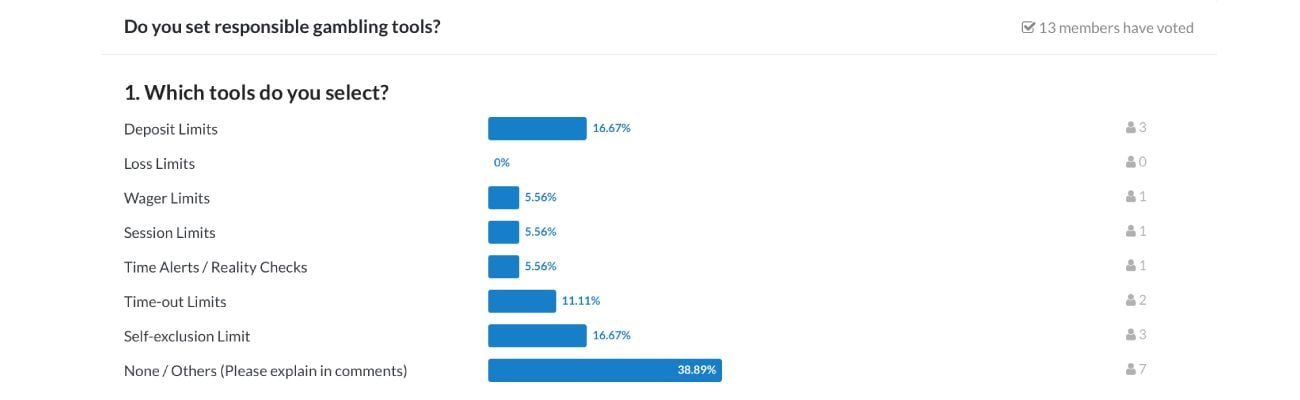
- 61.13% of respondents use some form of responsible gambling tools.
- The most popular options were deposit limits and self-exclusions with 16.67% each.
- 38.89% of respondents use no or other responsible gambling tools.
- Spreadsheets and their own budget management were the most popular alternative tools.
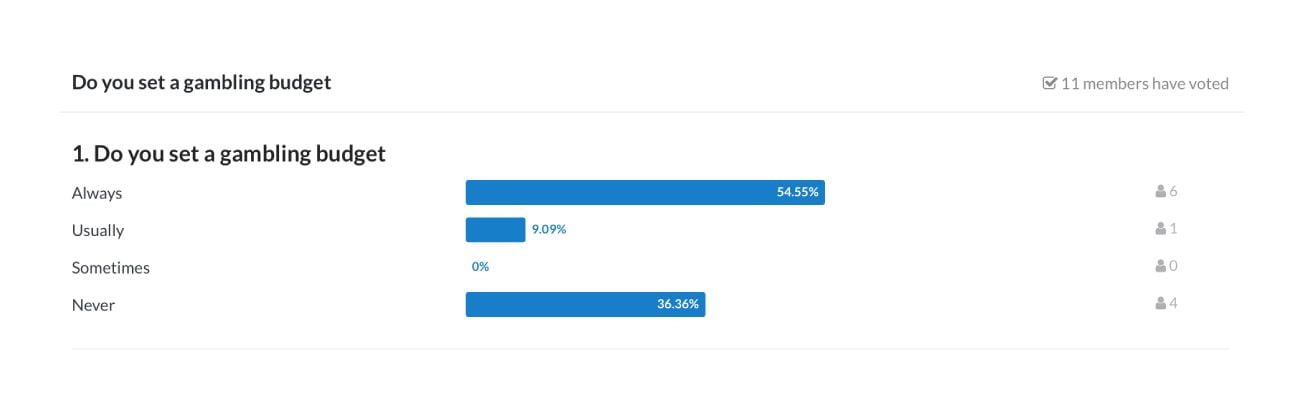
- 54.55% of players ‘Always’ set a budget, while 9.09% say they ‘Usually’ do.
The Majority Uses Responsible Gambling Tools
In our first poll, we asked users, ‘Do you set responsible gambling tools?’ and to select which, if any, they use. It’s important to remember that this is only a small sample of gamblers, but here’s what our forum users replied.
When all the options are combined together, we can see that 61.13% of respondents said they used some form of responsible gambling tool, while 38.89% said they used ‘none or others’.
Deposit Limits and Self-Exclusion Are the Most Popular
The most widely used responsible gambling tools are deposit limits and self-exclusion, both of which 16.67% of players each said they use.
In the comments, we saw a number of users discussing how they set monthly or weekly deposit limits to prevent them from overspending. They mention how doing so protects them from ‘excessive losses’ or getting carried away while gambling.
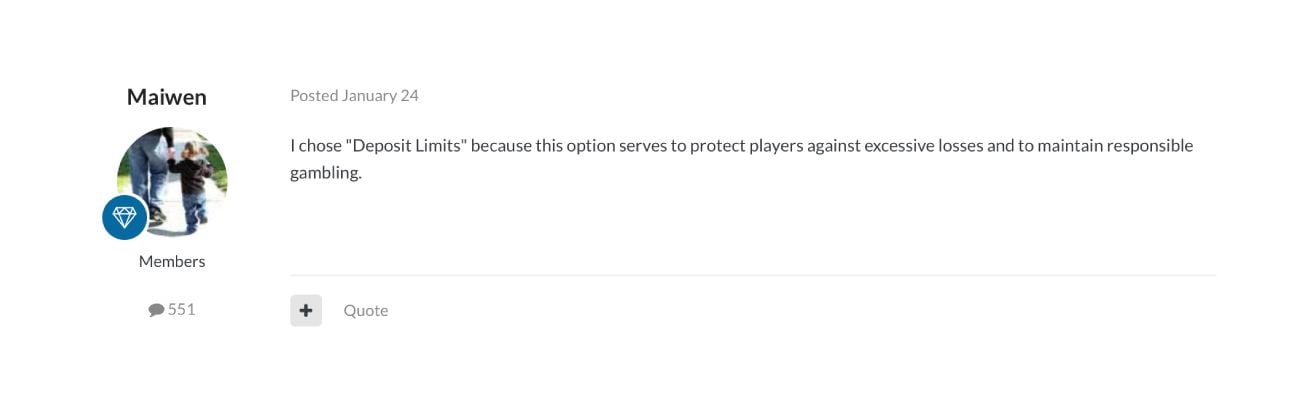
Deposit limits are widely recognised as the most popular method in the industry. They’re customisable, allowing players to set a maximum they want to spend based on how much they can afford and over a time period that works for them. On top of that, they’re simple to set up and offered by the many providers while gamblers are creating their account, making them some of the best-known options.
Every Other Player Always Sets a Budget
In our second poll, which asked players whether they set a budget when gambling, 54.55% responded that they ‘Always’ set a budget. As seen in the comments, it’s a relatively even split between whether players use their own methods to do so or turn to deposit limits.
Some deposit the amount that works for them at the start of the week or month, and ensure they don't exceed this. Others, meanwhile, prefer having the solid barrier of a deposit limit to prevent them from overspending.
A further 9.09% of respondents said that they ‘Usually’ set a budget. A few chose to explain this in the comments, saying that they won’t always set a budget if there’s a poker competition on, for example.
Self-Exclusion Is Equally Popular
Self-exclusion limits were just as popular an option as deposit limits, with many players saying they use them when they need to take a break from gambling. They highlight that they’re an effective way to prevent overspending or getting caught up in a game.
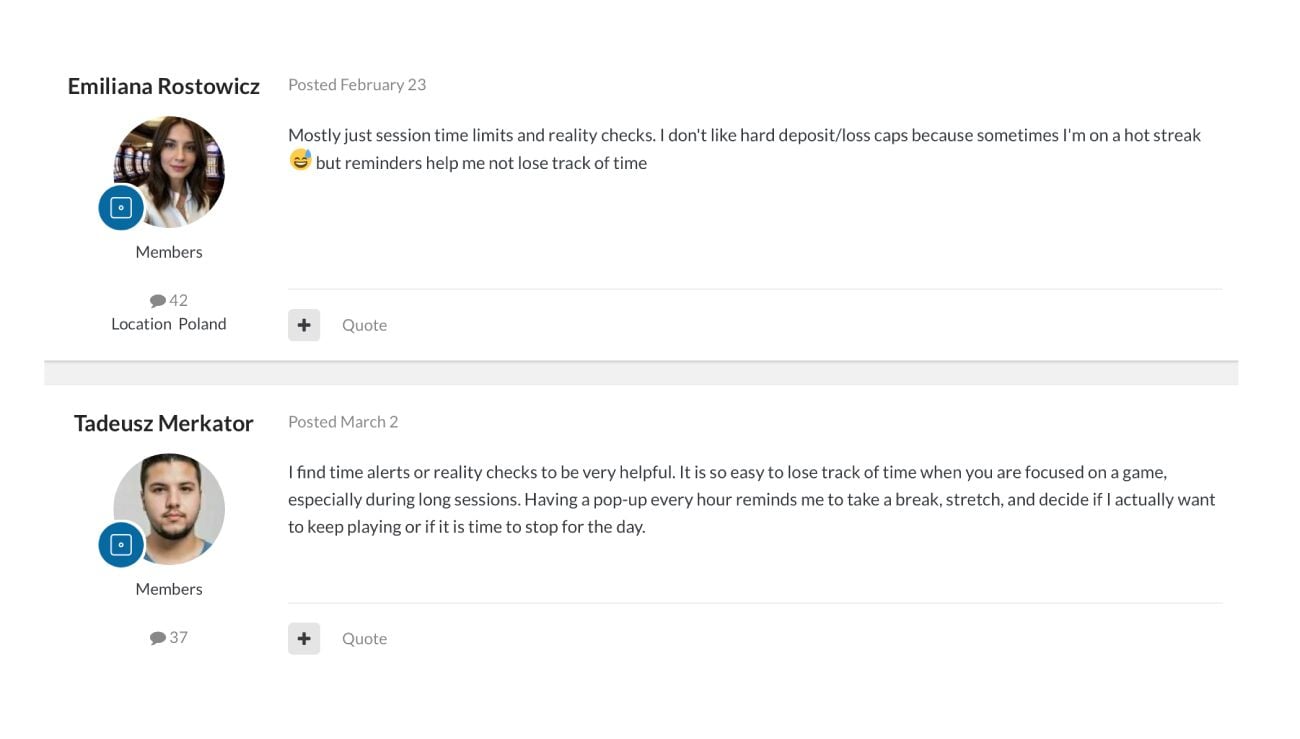
We saw similar discussion from players about using time-out limits or reminders, with many using them as a way to not ‘lose track of time’ when gambling. As one of our members says,’It is so easy to lose track of time when you are focused on a game’, which can lead to players overspending without even realising.
They also highlight how reminders are a great opportunity for players to reflect, look at how much they’ve spent, and decide whether they want to continue. It can be all too easy to keep hitting the ‘Continue’ button or spinning a slot. Session limits and short self-exclusion periods help break this behaviour up.
Nearly 40% Use No or Other Tools
Of the members surveyed, 38.89% answered to say they used ‘none or others’, which they went on to explain in the comments. From these, we learn that many players feel that they can manage their spending without using the tools on sites. A number said they begin gambling with a set budget each month and ensure they don’t deposit or spend anything above that threshold.
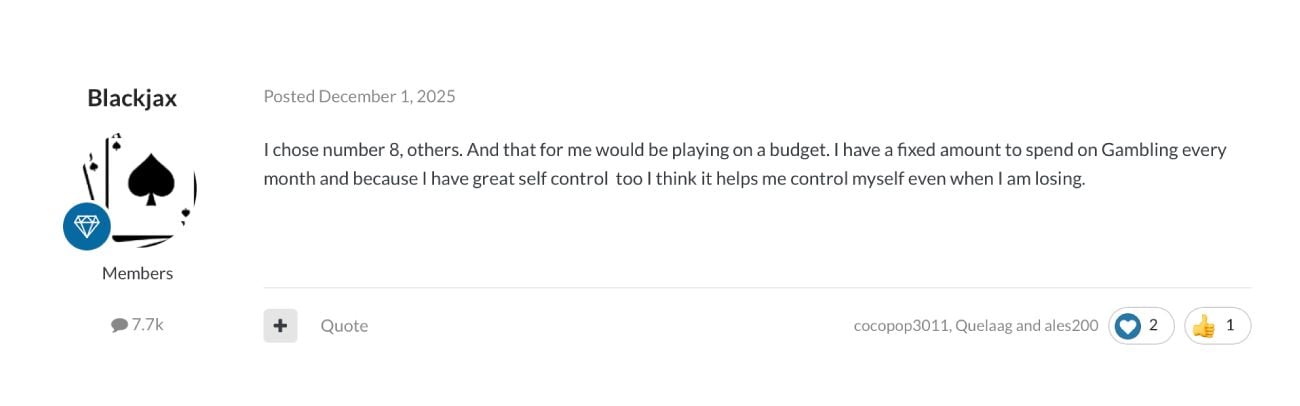
A few discussed using spreadsheets to track how much they deposit on gambling sites, in order to prevent overspending or chasing losses. This can be an effective tool to help players manage their budget, but it does rely on them making the decision to stick to it, which can sometimes be a challenge in the heat of the moment.
Responsible Gambling Misconceptions
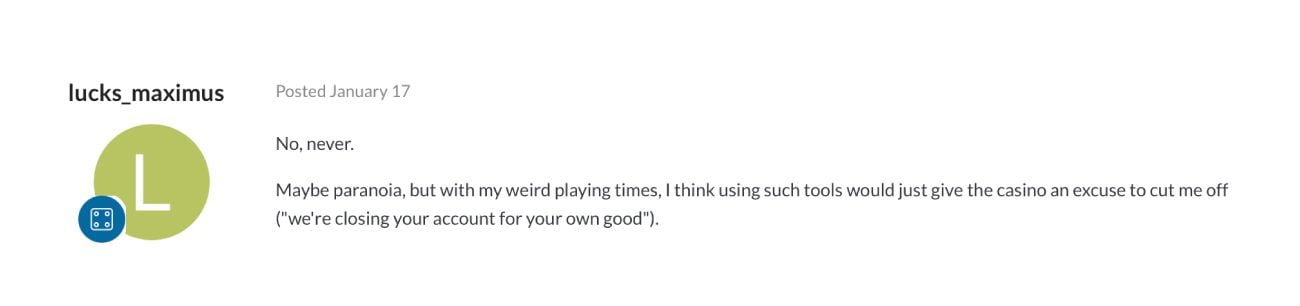
All the players recognised that it’s important not to spend beyond their means, or chase losses, or as one user puts it ‘chasing rabbits’. However, there were a considerable number who would prefer to do this on their own without using the tools provided by platforms. We saw concern from some players who felt that if they used reminders or time limits on a provider, this might be used as an ‘excuse’ to suspend their account.
All reputable providers should offer, and encourage players to use, responsible gambling tools in order to prevent harm.
The Industry Has a Way to Go
While it’s understandable that players want to use their own methods to control spending, it could also feed back into a common misunderstanding about responsible gambling tools: that they’re only for gamblers who have a problem. Responsible gambling tools are there for every player to make use of, and help to prevent a problem developing, rather than being used solely as a solution.
It highlights that the industry, from the Gambling Commission to providers, still has a way to go to correct these misconceptions. It’s essential to change players’ mindsets around responsible gambling, and encourage more players to use these helpful tools in order to prevent harm.


